
We live in the age of infinite scrolling, where thousands of pieces of content compete for a fraction of a second of attention. In this environment, a form of advertising has emerged that is as impactful as it is disruptive: FOOH, or Fake Out Of Home. It is a perfect fusion of creativity, technology, and entertainment. The most interesting thing? It looks real, but it isn’t.
FOOH advertising uses CGI (computer-generated imagery) to simulate spectacular urban interventions, which are then shared on social media as if they had occurred in the real world. This new format is achieving massive reach, viral interactions, and a genuine emotional connection with the public.
FOOH is an acronym for Fake Out Of Home, a term that refers to advertising campaigns created in simulated urban environments using digital visual effects.
Instead of setting up a physical structure, a marquee, or a giant installation in the middle of a city, everything is done virtually. Thanks to hyperrealistic CGI, the audience believes they are seeing something that has actually happened in the physical world… when in reality, it is a well-executed illusion.
🎬 It’s like mixing Hollywood with digital marketing.
📱 And it is specifically designed to break social networks.
The key to FOOH’s success lies in its ability to surprise and excite. Being so realistic and spectacular, it generates an immediate reaction:
The result is organic virality. People share content not because they are paid to, but because they want to be part of the collective amazement.
Feature | Traditional advertising | FOOH |
Production cost | High (logistics, permits, printing, installation) | Low to medium (all digital) |
Organic reach | Low (requires paid media) | High (viral, shareable) |
Creative flexibility | Limited by physics | Completely free |
Production time | Slow and bureaucratic | Agile (depending on the study) |
Legal/logistical risk | High | Null |
A giant mascara “applying” itself to subway cars. The video circulated on TikTok, Instagram, and Twitter, generating millions of views… and many believed it was real.

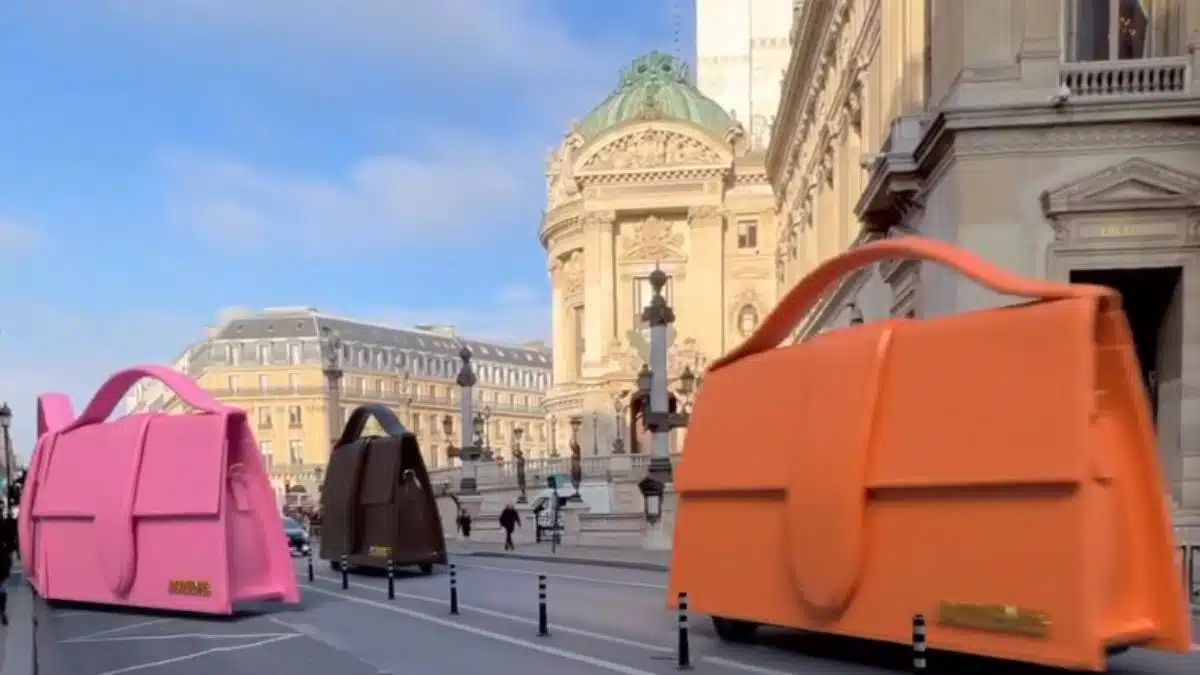
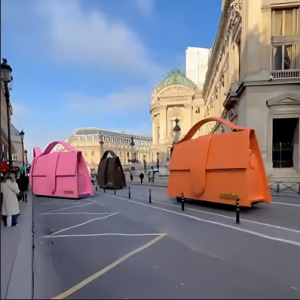
The bags from their latest collection have taken over the streets of central Paris to show themselves off to the world. They got over 2 million likes on the reel.
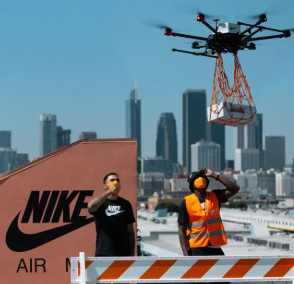
A shoe flying through the city, as if suspended from a colossal drone. Physically impossible, but incredible as CGI.
These examples show that imagination is the only limit when it comes to FOOH.
Often not. And that’s part of the magic. The “is this real?” effect acts as an emotional hook that multiplies engagement. The viewer watches, analyzes every detail, comments, asks questions… and ultimately shares.
📌 What matters is no longer whether it is real. It is whether it seems real and excites.
And in general, any brand that wants to break the mold, be shared, and generate conversation.
How much does a FOOH campaign cost?
It depends on the scope, length of the video, level of detail, and technical complexity. But compared to a physical installation in a city, FOOH can save up to 70% of the cost… and achieve greater online visibility.
Furthermore, it is reusable content: it can be adapted for different platforms, countries, and times of the year.
In our studio, we combine creativity + CGI + digital strategy to create FOOH campaigns that look real, go viral, and get everyone talking about your brand.
🎯 From concept to delivery, ready for social media, we take care of everything.
👉 Arrange a free, no-obligation video call with us and we’ll work together to find the best options for your brand. Click HERE

